City-by-City Market Analysis for India's Hospitality Investment Pitch
Built a layered market analysis to match global hospitality brands to specific Indian cities, moving beyond India's headline consumption story

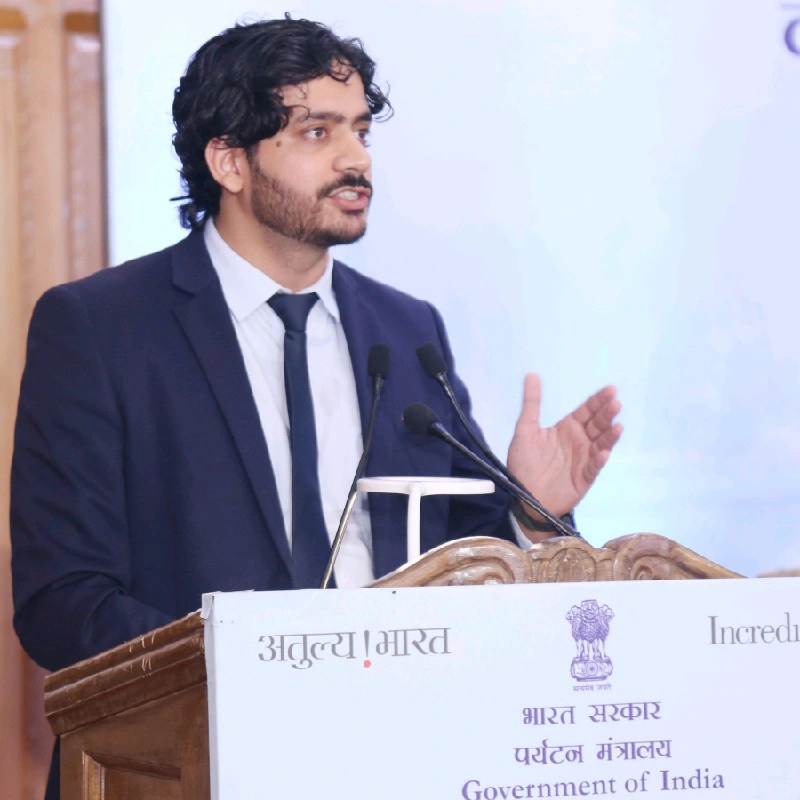
Ujjwal Priydarshi
Assistant Manager at Invest India


From their time as
Assistant Manager
Invest India • 2022
Overview
Ujjwal identified a structural problem in how India was being pitched to international hospitality investors. The country had a $240 billion travel economy, but the branded segment covered only around 200,000 keys, and the data available to international investors was thin, circular, and demand-heavy. Investors were not asking about India's consumption story. They were asking about **depreciation-adjusted returns on capital**, and the secondary sources to answer that question did not exist in th
The Story
Ujjwal identified a structural problem in how India was being pitched to international hospitality investors. The country had a $240 billion travel economy, but the branded segment covered only around 200,000 keys, and the data available to international investors was thin, circular, and demand-heavy. Investors were not asking about India's consumption story. They were asking about depreciation-adjusted returns on capital, and the secondary sources to answer that question did not exist in the hospitality space.
His approach was to build the analysis from the supply side up. He pulled hotel inventory data by segment across luxury, upper upscale, mid-scale, and budget categories, city by city. He layered in Ministry of Civil Aviation data on flight routes and frequencies, cross-checked against highway development and infrastructure spending, and triangulated across draft red herring prospectuses from publicly listed hospitality companies, which carried the highest data fidelity at a city and revenue-per-room level.
The output was a city-level investment map that identified where India's infrastructure, spending, and natural aesthetics converged into genuinely investable pockets, rather than a blanket India pitch. This gave him two distinct conversations: one with the government on which international brands to pursue, and one with the brands on which specific Indian markets matched their operating model in other geographies.
Bringing Banyan Group Back to India
Banyan Group had exited India in 2008 after a joint venture ran into Coastal Regulation Zone violations. Sixteen years later, Ujjwal reached out to restart the conversation. The initial response was a firm no. He persisted for over a year, drilling into the source of the hesitation rather than pushing the India pitch. The discomfort was rooted in past regulatory experience, not a fundamental view on the market.
He kept working the relationship, using his city-level data to address specific concerns as they surfaced. The conversation eventually warmed. Banyan Group is now being assisted with two properties in Kerala and one in Jammu and Kashmir.
The KSL Capital Engagement
KSL Capital, a multi-billion dollar private equity firm focused on experiential and travel, had no India presence despite being active in the Maldives, Korea, London, and Singapore. Ujjwal connected with their principal through a shared contact and has maintained the relationship across multiple calls over more than a year. The work is ongoing: building the case that India's consumption story is real and specific enough to warrant a position.